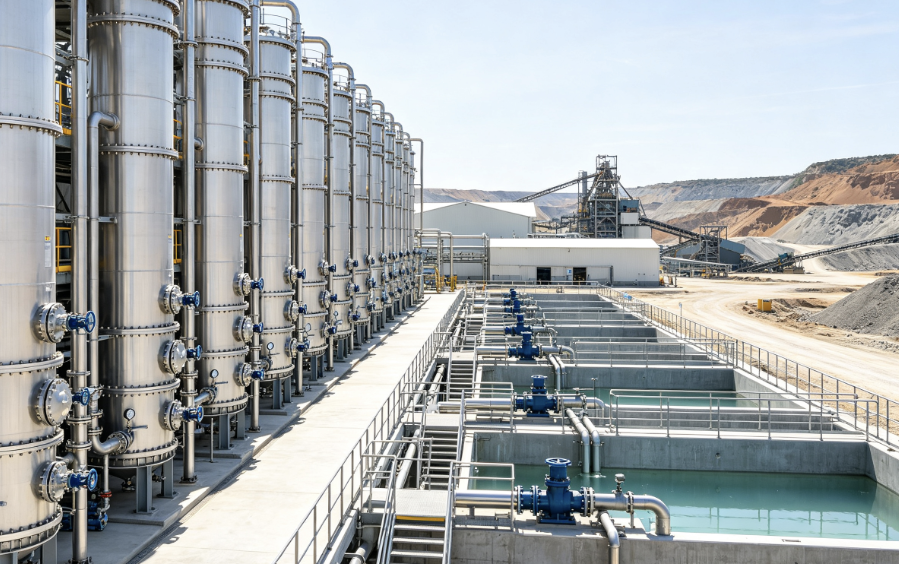
XIAN, SHAANXI, CHINA, September 29, 2026 /EINPresswire.com/ — Modern hydrometallurgy faces an escalating dual challenge across the global mineral processing sector. Industrial demand for high-purity battery minerals and critical metals continues to surge rapidly. Simultaneously, high-grade primary ore deposits are declining worldwide. Consequently, mining operators and recycling facilities increasingly process low-grade complex ores, industrial wastewater, and recycled electronic waste streams. Furthermore, tightening global environmental regulations enforce strict heavy metal discharge limits and push industries toward zero liquid discharge practices. These operational drivers create an urgent market need for separation technologies that offer high selectivity, physical durability, and reliable chemical stability in demanding hydrometallurgical environments.
Traditional metal separation techniques, such as non-selective chemical precipitation and liquid-liquid solvent extraction, encounter significant operational obstacles when handling complex feedstocks. Chemical precipitation generates substantial volumes of hazardous sludge and struggles to isolate target elements with high purity. Solvent extraction provides effective selectivity, but organic solvent losses, phase disengagement issues, fire risks, and high reagent costs limit its economic feasibility for polishing low-concentration streams. Therefore, industrial facilities increasingly implement advanced solid-phase ion exchange solutions. Operating as a <a href="https://www.seplite.com/chelating-resin/“>Global Leading Chelating Ion Exchange Resin Supplier, Sunresin develops engineered SEPLITE® resin technologies designed specifically to overcome these complex process challenges. Through specialized polymer architectures, global hydrometallurgical processing plants achieve efficient metal recovery, reduce operational costs, and meet stringent purity requirements.
The Science of Precision: How Chelating Resins Master Extreme Process Conditions
Unlike standard cation exchange media that rely primarily on simple electrostatic attraction, chelating resins operate through coordinate covalent bonding mechanisms. The polymer matrices contain specialized functional groups equipped with donor atoms, including nitrogen, oxygen, phosphorus, and sulfur. Consequently, these active sites form stable coordination complexes with specific target metal cations. This targeted coordination chemistry allows process systems to selectively capture target metal ions, even when surrounded by high background concentrations of alkali or alkaline earth metals such as sodium, calcium, and magnesium.
Industrial hydrometallurgical processing environments present harsh operational conditions, including strong mineral acid solutions, elevated operating temperatures, and severe osmotic shock during regeneration cycles. Sunresin New Materials Co. Ltd. engineers its proprietary polymer matrices to withstand these continuous mechanical and chemical stresses. Matrix designs utilize macroporous polymeric beads that combine fast mass-transfer kinetics with exceptional physical toughness. As a direct result, the resin beads resist osmotic cracking, physical attrition, and matrix breakdown during continuous column operations over extended operational lifespans.
Furthermore, process matrix tolerance plays a decisive role in continuous plant design. In typical leach solutions, high background concentrations of dissolved ferric iron, aluminum, and silica frequently cause resin fouling or foul downstream equipment. Advanced functionalized media overcome these operational barriers by maintaining target ion selectivity across broad pH ranges. Whether extracting copper from strongly acidic leachates or refining nickel from neutral raffinate streams, tailored functional groups ensure optimal dynamic capacity, minimal matrix fouling, and long resin lifespans.
Deep-Dive into Top Applications: High-Value Metal Recovery Scenarios
1. Selective Copper (Cu) Recovery from Acidic Leachates and Raffinates
Copper extraction from low-grade heap leach solutions, acidic mine drainage, and solvent extraction raffinates presents severe technical hurdles. These processing streams typically contain high background levels of ferric iron, aluminum, and manganese alongside relatively low concentrations of dissolved copper ions. Conventional chemical precipitation cannot isolate copper without co-precipitating substantial amounts of iron, which severely degrades final product quality and increases processing costs.
To solve this separation challenge, specialized SEPLITE® chelating media utilize iminodiacetic acid or picolylamine functional groups. These functional groups exhibit an exceptionally high preference for copper ions over ferric iron in acidic media between pH 1.5 and pH 2.5. When raw solutions flow through fixed-bed resin columns, the media selectively binds copper ions while allowing ferric iron and aluminum to pass through unobstructed. Subsequently, dilute sulfuric acid elutes the bound copper, producing a highly concentrated copper sulfate stream ideal for direct electrowinning. This targeted separation process maximizes copper yield while drastically lowering chemical reagent consumption.
2. Nickel (Ni) & Cobalt (Co) Purification in Battery Recycling & Laterite Processing
The ongoing expansion of the electric vehicle market drives unprecedented global demand for high-purity battery chemicals, particularly nickel sulfate and cobalt sulfate. However, raw materials derived from High-Pressure Acid Leaching (HPAL) of nickel laterite ores or recycled lithium-ion batteries contain complex impurity profiles. Achieving the strict 99.99% purity thresholds required for precursor cathode active materials requires complete removal of micro-impurities, including calcium, magnesium, zinc, lead, and copper.
Sunresin manufactures specialized aminophosphonic and bis-picolylamine chelating resins tailored specifically for battery chemical refining. These resins excel at scavenging micro-ppm impurity levels from concentrated nickel and cobalt solutions. For example, aminophosphonic functional resins selectively capture trace calcium and magnesium from pregnant leach solutions where background nickel concentrations exceed 80 grams per liter. By integrating these precise resin beds into continuous purification loops, hydrometallurgical refiners eliminate product contamination, minimize reagent consumption, and maintain consistent battery-grade output.
3. Precious Metal (Gold Au, Platinum Group Metals) Scavenging from Complex Systems
Recovering precious metals from low-grade ores, industrial process waste, spent catalysts, and electronic scrap represents a high-value engineering priority. Gold, platinum, palladium, and rhodium often exist at trace concentrations within complex acidic or chloride-heavy leach liquors. Traditional carbon adsorption or standard anion exchange media frequently suffer from slow kinetic performance, low loading capacities, or irreversible poisoning by organic contaminants and base metals.
To overcome these limitations, thiourea-functionalized and specialized polyamine chelating resins provide an effective solution. These resins form extremely strong coordination bonds with noble metal complexes, such as gold cyanide or chloroplatinate complexes, even in solutions with high concentrations of copper, iron, or zinc. Furthermore, the macroporous resin matrix enables rapid adsorption kinetics and high dynamic operating capacity. Operators can efficiently elute precious metals using specialized chemical eluents, enabling complete resin regeneration and repeated reuse over hundreds of operating cycles. This long-term operational durability lowers total capital expenditure for precious metal refiners.
4. Ultra-Deep Heavy Metal Scavenging (Hg, Pb, Cd) and Effluent Polishing
Managing toxic heavy metals in industrial effluent streams represents a critical regulatory and operational imperative worldwide. Elements such as mercury, lead, and cadmium pose severe environmental and health risks, even at trace concentrations. In chlor-alkali production, mercury contamination in brine streams damages electrolysis membranes and compromises product safety. Similarly, modern mining discharge regulations mandate heavy metal concentration limits down to single-digit parts per billion (ppb).
Sunresin manufactures advanced thiol and dithiocarbamate chelating resins designed specifically for ultra-deep heavy metal removal. For example, Sunresin’s specialized ion exchange technology achieves <a href="https://www.seplite.com/sunresin-s-ion-exchange-technology-achieves-deep-mercury-removal-in-the-chlor-alkali-industry/“>deep mercury removal in the chlor-alkali industry, reducing mercury concentrations in industrial brine streams to below 5 ppb. This high-affinity technology applies equally to industrial effluent polishing, where resins selectively bind lead, cadmium, and mercury from complex salt backgrounds. The treated water easily satisfies strict environmental discharge regulations, enabling industrial facilities to implement closed-loop water recycling programs.
Beyond Resin: Sunresin’s Integrated EPC & R&D Advantage
Delivering successful industrial separation outcomes requires more than manufacturing high-performance polymeric media; it demands comprehensive process engineering expertise. Operating as a trusted global partner, <a href="https://www.seplite.com/sunresin-profile/“>Sunresin (Sunresin New Materials Co. Ltd.) combines advanced material research with complete engineering, procurement, and construction (EPC) capabilities. The company maintains state-of-the-art laboratory testing facilities and pilot testing rigs to evaluate customer-specific feedstocks thoroughly. Through detailed matrix testing, experienced application engineers optimize operating parameters, column hydrodynamic design, and regeneration protocols prior to full-scale commercial installation.
Furthermore, Sunresin operates automated manufacturing facilities that comply with rigorous ISO-certified quality management standards. Every production batch undergoes strict quality control testing for physical strength, bead size distribution, and dynamic exchange capacity. Beyond resin supply, Sunresin designs and builds custom automated skid-mounted equipment modules fitted with advanced control systems. This integrated service model ensures seamless equipment integration, rapid site commissioning, and optimized operational costs for global mining and industrial clients.
Conclusion & Next Steps: Partnering with Sunresin for Sustainable Hydrometallurgy
As global industries move toward sustainable circular economy models, efficient resource recovery remains essential. Chelating ion exchange technologies provide the precise selectivity and operational durability required to transform complex metallurgical waste streams and low-grade leachates into high-value product streams. By combining high-capacity SEPLITE® chelating resins with turnkey EPC engineering services, Sunresin helps global operators maximize mineral recovery while minimizing environmental impacts.
Industrial processing plants seeking to improve metal recovery efficiency, resolve process bottlenecks, or conduct pilot feasibility testing can connect directly with technical specialists. Learn more about customized separation technologies and request matrix testing evaluations by visiting the official company website at <a href="https://www.seplite.com/“>https://www.seplite.com/.
Sunresin
Sunresin
email us here
Legal Disclaimer:
EIN Presswire provides this news content “as is” without warranty of any kind. We do not accept any responsibility or liability
for the accuracy, content, images, videos, licenses, completeness, legality, or reliability of the information contained in this
article. If you have any complaints or copyright issues related to this article, kindly contact the author above.

Media gallery