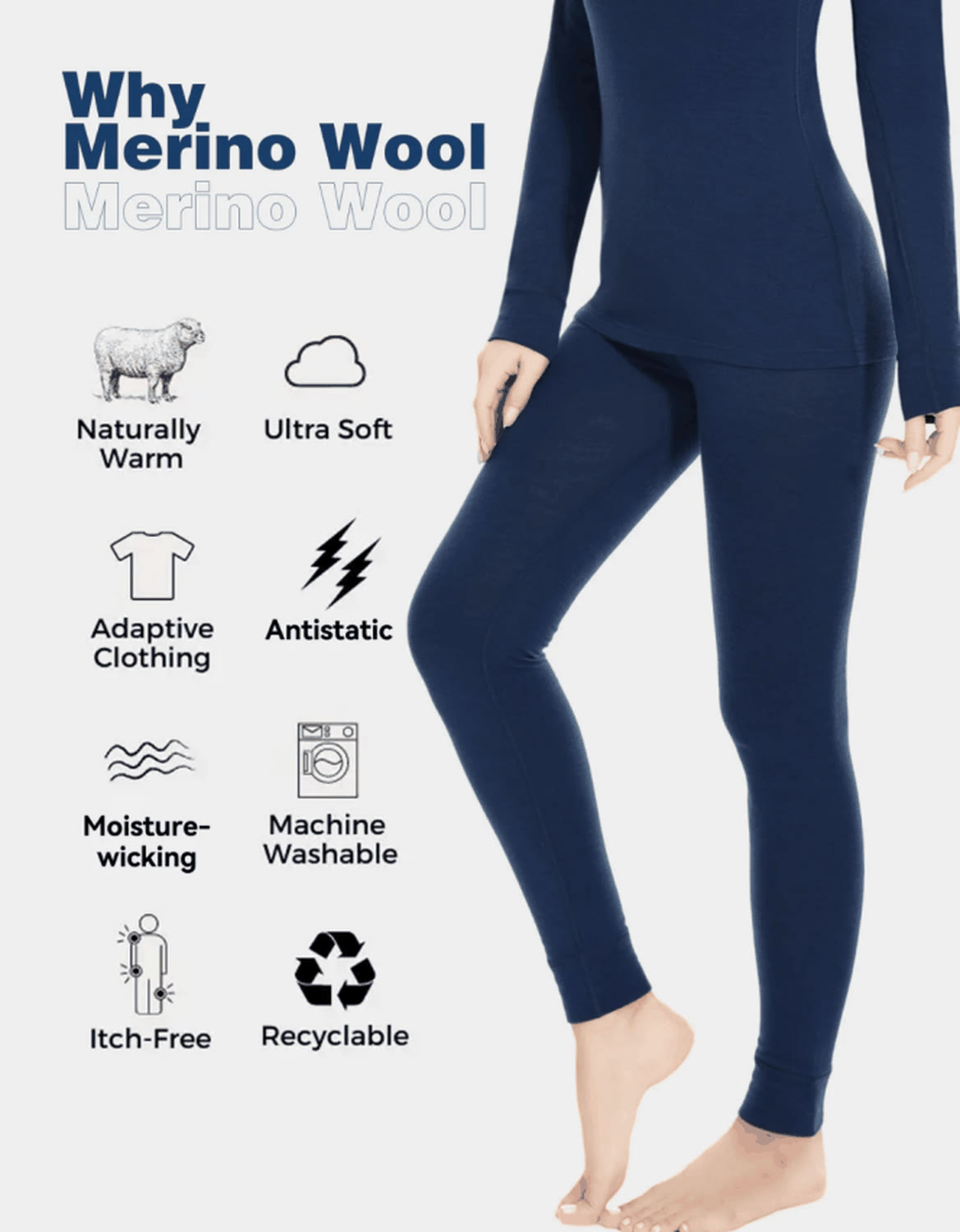
NEW YORK CITY, NY, UNITED STATES, October 25, 2026 /EINPresswire.com/ — A morning jog in crisp autumn air, a weekend hike through misty trails, or simply a long day at the office during winter — these everyday moments should feel comfortable, not marked by itchy seams, clammy fabric, or lingering odors. Yet for people with sensitive skin, finding the right base layer can be surprisingly frustrating. Synthetic materials tend to trap heat and moisture against the skin, while conventional wool often triggers prickle and irritation. This is precisely where a Skin-Friendly Merino Wool Base Layer for Sensitive Skin becomes worth exploring.
WOOLCANO, a merino wool apparel brand under Sinosky Limited, has built its product line around 100% Merino Wool base layers — thermal underwear, tops, pants, and matching sets for men, women, and kids. The brand’s use of superfine Australian Merino Wool at a typical fiber diameter of 18.5 micrometers, combined with RWS-certified sourcing, offers a practical foundation for wearers who need gentleness next to their skin without sacrificing warmth or performance.
The following guide draws on WOOLCANO’s approach to fabric selection and construction to outline what sensitive-skin consumers should look for when shopping for merino base layers.
Check Fiber Fineness And Combing Quality First
Not all merino wool feels the same against the skin. The difference comes down to fiber diameter, measured in micrometers. Superfine Merino Wool generally falls within the 17.5 to 19.5 micrometer range. At this fineness, individual fibers are thin enough to bend when they contact skin rather than poking into it. Research in textile science has long established that fibers below roughly 20 micrometers sit below the threshold at which human nerve endings register a prickle sensation. WOOLCANO’s core fabrics use 18.5-micrometer fibers, placing them well within this comfort zone.
Fineness alone is not the whole story, though. The combing process matters just as much for anyone seeking a skin-friendly merino wool base layer. Worsted-spun or combed yarns have their short, loose fibers removed before spinning, which reduces the tiny protruding ends — known as fiber fly or hairiness — that can tickle and irritate reactive skin. WOOLCANO emphasizes itch-free wear across its product range, a claim rooted in this combination of superfine fiber selection and careful yarn preparation. Double-sided jersey knitting further smooths the fabric surface on both the inner and outer face, minimizing physical contact points that could cause discomfort during extended wear.
Prioritize Natural Moisture Management And Odor Resistance
Sensitive skin reacts poorly to prolonged dampness. When sweat sits on the surface, it can soften the skin barrier and invite redness or rash, especially under tight-fitting layers. Merino wool addresses this through its natural hygroscopic properties — the fiber can absorb more than 30 percent of its own weight in moisture vapor before it starts to feel wet. This means the fabric actively pulls perspiration away from the skin and releases it into the surrounding air, keeping the microclimate between body and garment notably drier than most synthetics achieve.
There is a secondary benefit that sensitive-skin wearers often overlook: odor resistance. Merino wool’s complex protein structure naturally inhibits the growth of odor-causing bacteria, which means a merino wool base layer for sensitive skin does not need to be washed after every single use. Fewer wash cycles translate directly into less exposure to detergent residues — a common irritant for reactive skin. Sinosky Limited highlights this odor-resistant quality across its WOOLCANO product descriptions, and it is a meaningful practical advantage for anyone trying to reduce chemical contact with their skin.
Verify Raw Material Certifications And Traceability
When a base layer claims to be “100% Merino Wool,” it helps to know whether that claim can be verified. Certifications provide a layer of accountability. The Responsible Wool Standard (RWS) is one of the more rigorous programs in the wool supply chain. It traces fiber from farms that meet animal welfare and land management requirements through each processing stage to the finished product.
WOOLCANO’s parent company, Sinosky Limited, has undergone auditing by IDFL, an internationally recognized testing and certification body. Through this process, the company has obtained Scope Certificates covering RWS, GRS (Global Recycled Standard), and OCS (Organic Content Standard). For sensitive-skin buyers, the RWS certification is particularly relevant — it reduces the risk of undisclosed fiber blending and confirms that the merino wool originates from responsibly managed sources. WOOLCANO product pages clearly label items as featuring RWS-certified wool, and buyers can request a copy of the Scope Certificate for verification.
Pay Attention To Construction Details And Care Instructions
Even the softest fiber can cause problems if the garment is poorly constructed. Flatlock or bonded seams — sometimes described as seamless or bone-free stitching — reduce the raised ridges that traditional overlocked seams create. These ridges can rub against skin during movement, particularly at high-friction zones like the shoulders, underarms, and waistband. WOOLCANO’s base layer designs incorporate close-fitting cuts with reduced seam bulk, aiming to sit smoothly against the body without bunching or chafing.
Proper care also plays a role in keeping a skin-friendly merino wool base layer comfortable over time. Machine washing on a gentle cycle in cold water preserves the fiber’s natural softness and prevents felting — the matting process that makes wool stiff and scratchy. Laying garments flat to dry, rather than tumble drying on high heat, further protects the fabric structure. WOOLCANO’s product pages include care icons reflecting these guidelines, and following them helps maintain the itch-free feel that sensitive-skin wearers depend on.
A Closer Look At The WOOLCANO Merino Base Layer Range
WOOLCANO organizes its collection across men’s, women’s, and kids’ categories, each offering base layer shirts, pants, and coordinated sets. Two fabric weights anchor the range: a 190 g/m² option suited to mild conditions and daily wear, and a 260 g/m² option designed for colder temperatures and outdoor layering. All pieces use 100% Merino Wool construction, and the lineup covers crew-neck and zip-neck tops alongside full-length bottoms. Because the selection criteria outlined above — fiber fineness, combing quality, moisture management, certification, and seam construction — apply consistently across these categories, the choice between products comes down mainly to weight preference, fit, and intended activity.
Making The Right Choice For Reactive Skin
Selecting a merino wool base layer for sensitive skin does not require guesswork when the key criteria are clear: superfine fibers at or below 19 micrometers, combed yarn construction that removes short irritating fibers, RWS-traceable raw materials that rule out unverified blends, low-profile seam design that minimizes friction, and gentle care habits that preserve the fabric’s natural softness.
WOOLCANO’s 18.5-micrometer superfine merino range, backed by RWS Scope Certification through Sinosky Limited, addresses each of these points within a single product line. Sensitive-skin consumers interested in exploring the collection or requesting certification documentation can visit the brand’s website at https://woolcano.com/.
Sinosky Limited
WOOLCANO
Legal Disclaimer:
EIN Presswire provides this news content “as is” without warranty of any kind. We do not accept any responsibility or liability
for the accuracy, content, images, videos, licenses, completeness, legality, or reliability of the information contained in this
article. If you have any complaints or copyright issues related to this article, kindly contact the author above.

Media gallery